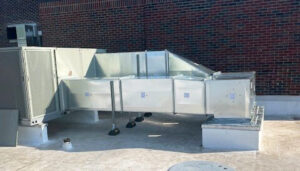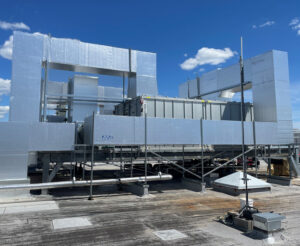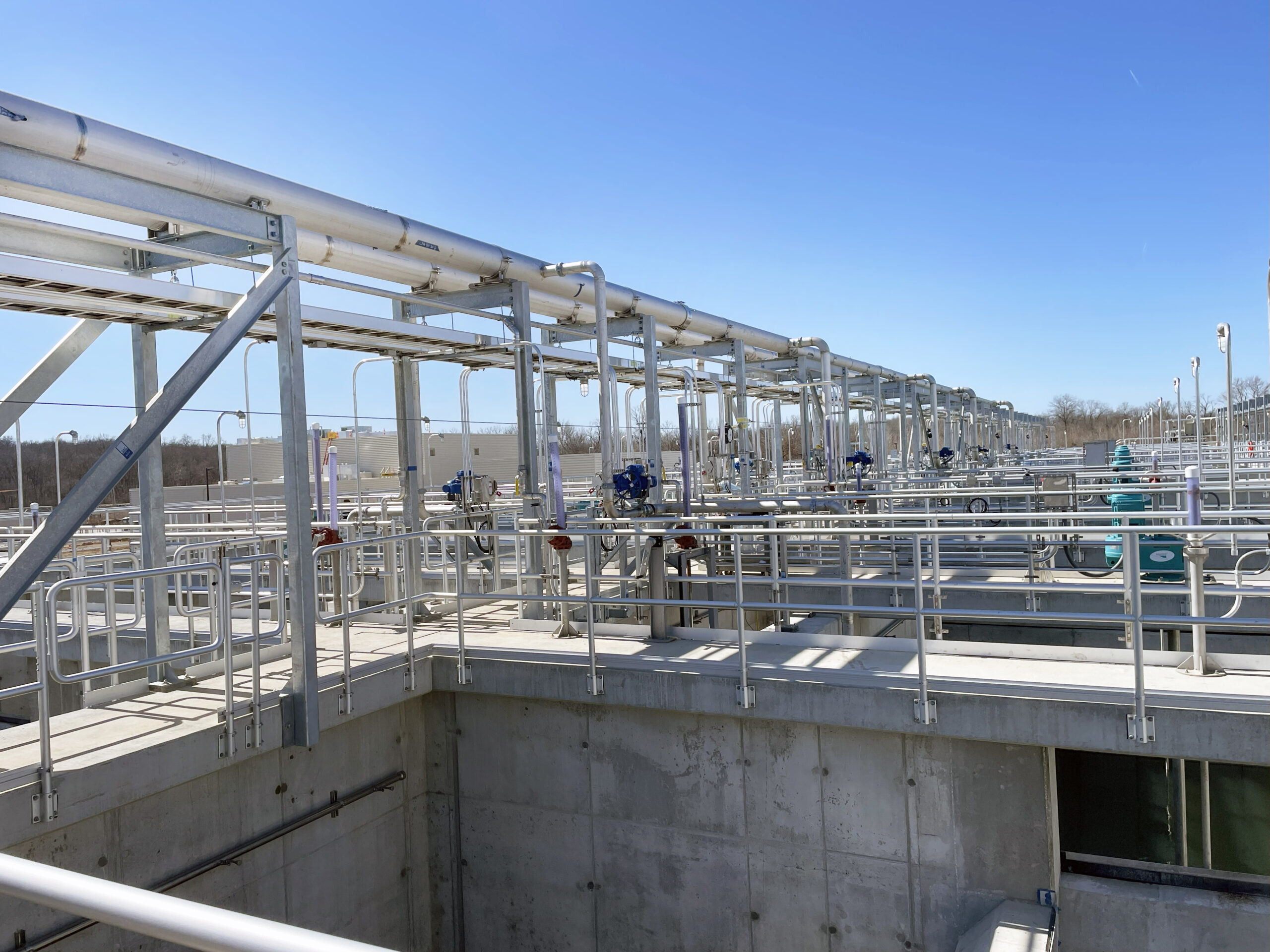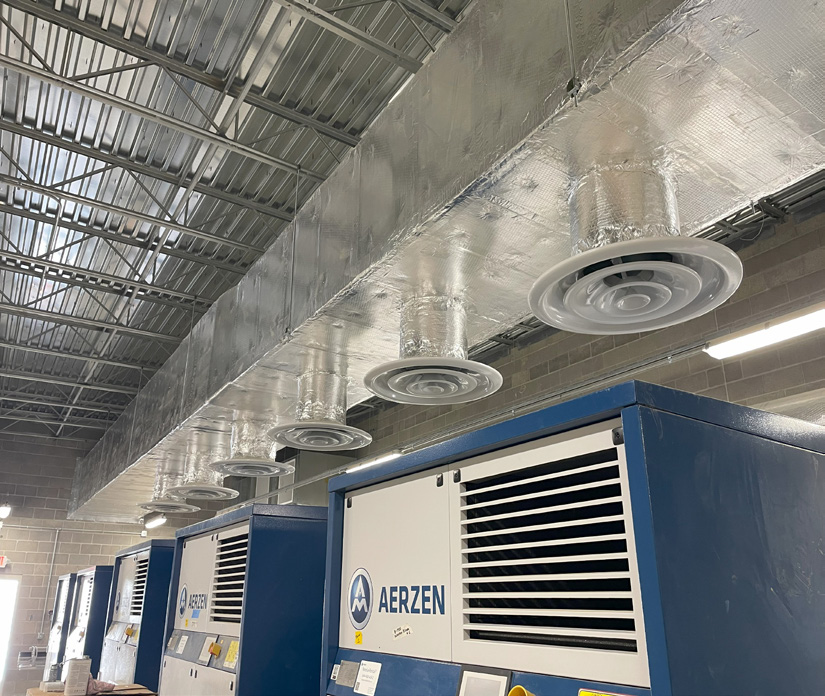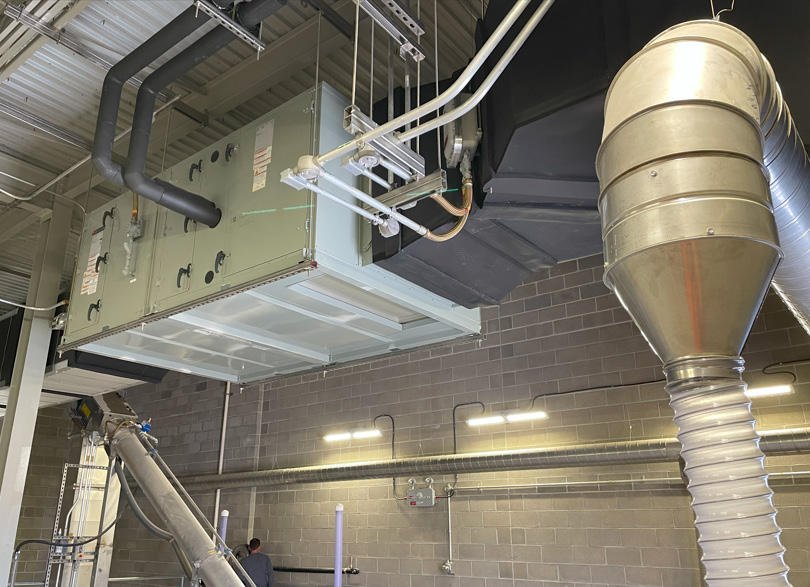

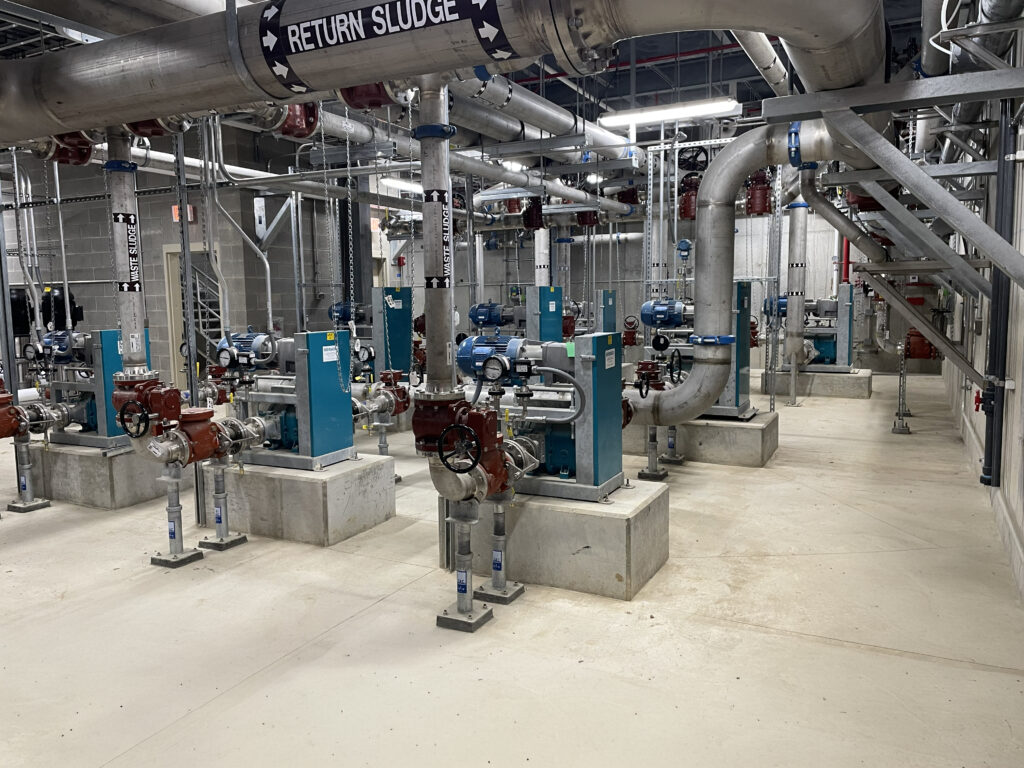
The Wright City Wastewater Treatment Plant project consisted of 19 total structures, including the Process Building, Headworks, Blower Building, BNR and BNR Splitter, two Electrical Buildings, three Clarifiers and a Clarifier Splitter, Filter Building, UV Trough, Reaeration, EQ Vault, Influent Lift Station, Influent Metering Vault, Administration Building, and the Chemical Building. Within these facilities, Murphy installed all process piping along with ductwork and plumbing systems. The scope of work also included the installation of a wide range of mechanical equipment such as split systems, hot water and boiler pumps, glycol feed systems, boilers, air handling units, an XP air handling unit, a dedicated outdoor air system, humidifiers, unit heaters, cabinet unit heaters, VRFs, gravity ventilators, louvers, ERVs, exhaust fans, water heaters, sump pumps, an indense unit, filter units, process pumps, and blowers.
The new treatment plant was constructed to support both the AFG meat packing facility and Wright City’s wastewater needs. Murphy successfully met the project schedule and budget through consistent coordination and communication. Weekly touch-base meetings with Alberici and W&C provided opportunities to review upcoming tasks, address engineering and design questions, and discuss equipment and material requirements. In addition, daily pull plan meetings with trade foremen helped align manpower and crane resources to keep progress on track. Strong collaboration between the field teams and VDC/fabrication shops was also critical to maintaining efficiency, while Alberici and W&C’s openness to cost-and time-saving ideas further supported project goals.
Murphy contributed significant value by identifying opportunities to improve the design and execution. While the original design specified ductile iron piping, Murphy successfully advocated for the use of Schedule 10 stainless steel piping, which eliminated lead time concerns and reduced labor associated with handling the material. Similarly, Murphy recommended using spiral ductwork instead of PVC for odor control, offering advantages in both material and labor costs. In both cases, our fabrication shops were able to quickly fabricate and deliver the required materials, helping to further reduce lead times.
In total, the project included eight IWIs, and approximately 70 to 75 percent of the major piping was prefabricated, highlighting Murphy’s emphasis on efficiency, planning, and execution throughout the project.